EU Cyber Resilience Act (CRA): Key Requirements, Timeline and Manufacturer Preparation
2026-11-20 · Cyber
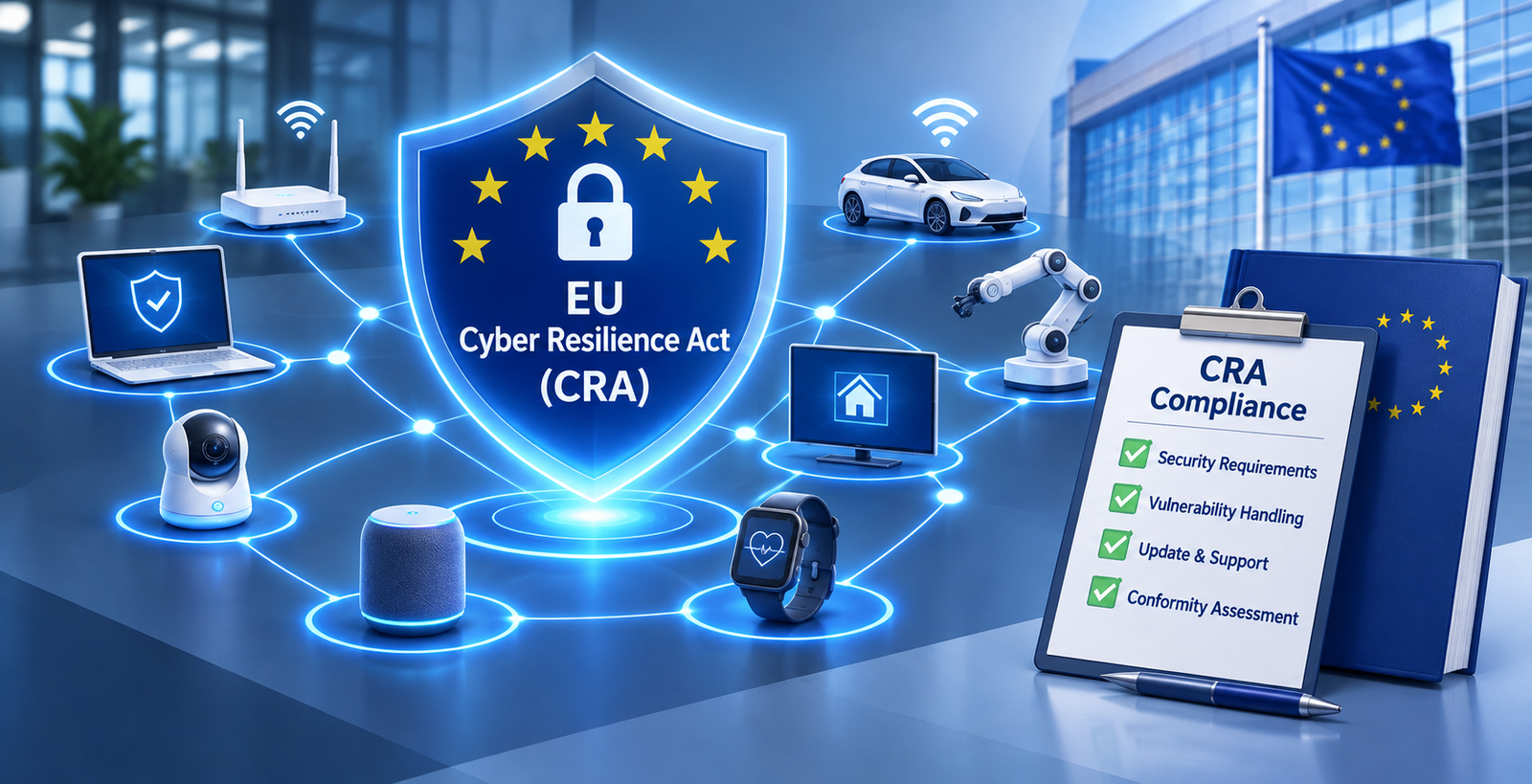
The European Union's Cyber Resilience Act (CRA), Regulation (EU) 2024/2847, introduces mandatory cybersecurity requirements for a wide range of products with digital elements placed on the EU market.
The CRA establishes cybersecurity obligations covering the entire product lifecycle, including secure design and development, vulnerability management, security updates, technical documentation, and conformity assessment.
Manufacturers developing or exporting IoT devices, industrial equipment, network products, smart home devices, and software to the European market should assess the applicability of the CRA and begin preparing for compliance.
1. What Is the EU Cyber Resilience Act?
The Cyber Resilience Act is an EU regulation designed to improve the cybersecurity of products with digital elements (PDEs).
Products that connect directly or indirectly to other devices or networks may fall within the scope of the CRA.
Examples of products that may be subject to CRA requirements include:
IoT devices and smart home products
Industrial controllers and connected industrial equipment
Routers, gateways, and networking devices
Embedded software and certain standalone software products
Smart appliances and connected electronic devices
However, actual applicability depends on the product's intended purpose, functionality, applicable legislation, and relevant exclusions.
2. Important CRA Compliance Dates
Manufacturers should consider the following milestones when planning their CRA compliance activities.
December 11, 2024 — CRA Entry into Force
The Cyber Resilience Act entered into force, initiating the phased implementation of mandatory cybersecurity requirements for products with digital elements.
September 11, 2026 — Vulnerability and Incident Reporting Obligations
Certain reporting obligations relating to actively exploited vulnerabilities and severe security incidents affecting products with digital elements became applicable.
Manufacturers should establish appropriate processes to identify reportable events, manage vulnerabilities, and meet applicable reporting requirements.
December 11, 2027 — Main CRA Requirements Become Applicable
The principal CRA obligations, including essential cybersecurity requirements and relevant conformity assessment procedures, become applicable.
Certain provisions have separate application dates or transitional arrangements, so manufacturers should verify the requirements relevant to their products.
3. Key Cybersecurity Requirements Under the CRA
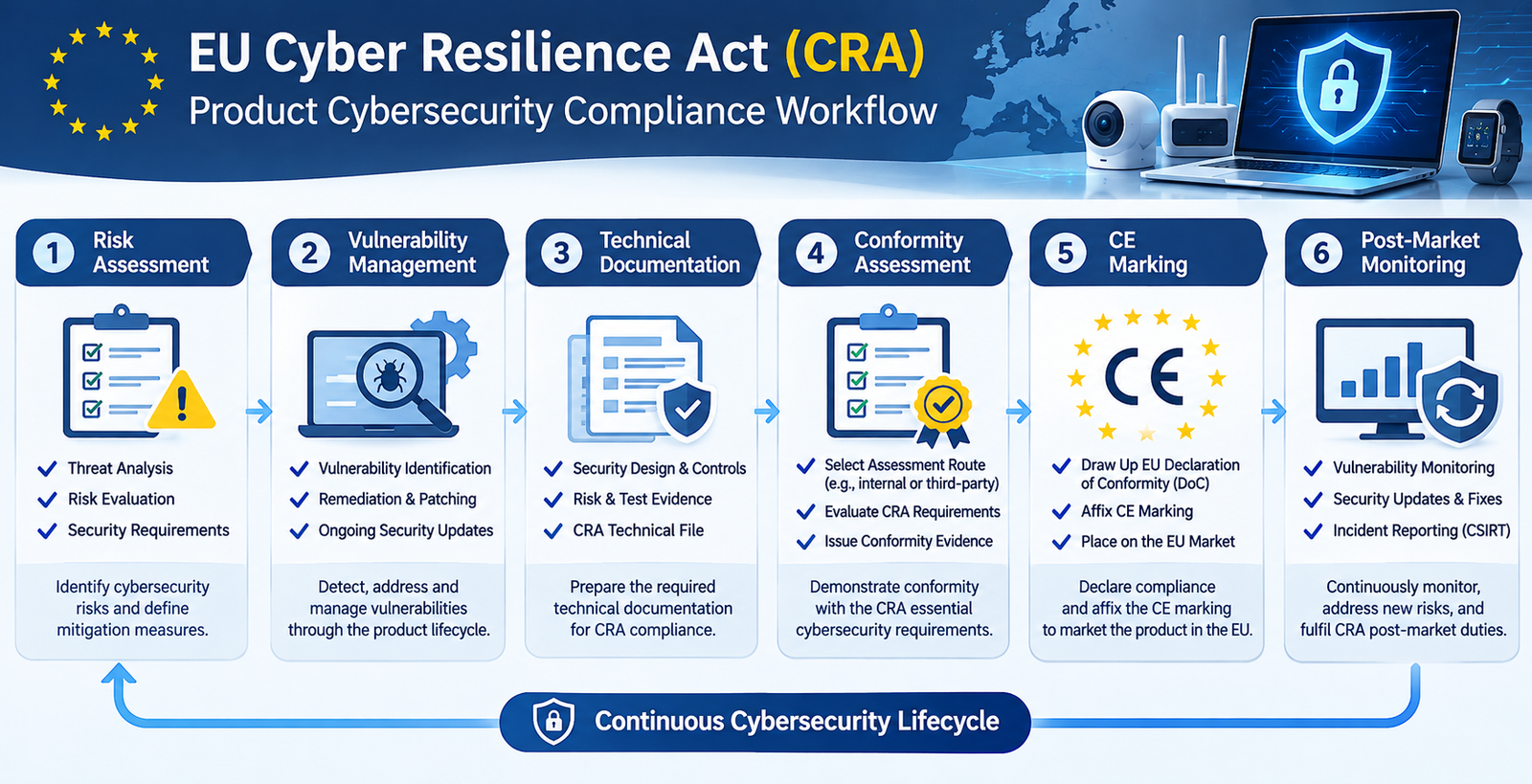
The CRA requires manufacturers to address cybersecurity risks throughout product design, development, production, and maintenance.
Cybersecurity Risk Assessment
Manufacturers must identify and assess cybersecurity risks associated with their products.
Appropriate security measures should be implemented based on the identified risks and the characteristics of the product.
Secure Product Design
Products should be designed and developed to minimize cybersecurity risks, including unauthorized access, insecure default configurations, and exploitable vulnerabilities.
Vulnerability Management
Manufacturers must establish processes for identifying, documenting, assessing, and addressing product vulnerabilities.
Where applicable, manufacturers must also comply with vulnerability disclosure and reporting obligations.
Security Updates and Support
Manufacturers must provide appropriate security updates and determine the product's support period in accordance with applicable CRA requirements.
Technical Documentation
Manufacturers must prepare relevant technical documentation, including cybersecurity risk assessments, product descriptions, security design information, vulnerability management procedures, and evidence supporting conformity.
4. CRA vs. CE RED Cybersecurity: What Is the Difference?
Both the EU Radio Equipment Directive (RED) cybersecurity requirements and the Cyber Resilience Act address product cybersecurity. However, their regulatory frameworks and scopes differ.
CE RED Cybersecurity applies to certain categories of radio equipment subject to the relevant provisions of the Radio Equipment Directive.
The CRA, on the other hand, establishes a broader horizontal cybersecurity framework for products with digital elements.
Therefore, manufacturers should assess CRA applicability and any additional obligations even when their products have already undergone RED cybersecurity evaluation.
Compliance with RED cybersecurity requirements does not automatically demonstrate compliance with all CRA requirements.
5. How Should Manufacturers Prepare for CRA Compliance?
Manufacturers preparing for CRA compliance should consider the following activities:
Determine whether the product and its software components fall within the CRA scope.
Review product classification and applicable conformity assessment procedures.
Conduct a cybersecurity risk assessment.
Evaluate authentication, access control, encryption, and secure update mechanisms.
Establish vulnerability management and security incident reporting processes.
Prepare technical documentation and supporting test evidence.
Review applicable harmonized standards and conformity assessment requirements.
Integrating cybersecurity requirements early in product development can help reduce design changes, documentation issues, and potential delays during compliance assessment.
6. Cybersecurity Testing and Evaluation for CRA Preparation
Manufacturers preparing for CRA compliance may need to consider various cybersecurity testing and evaluation activities depending on product architecture and applicable requirements.
Typical evaluation areas include:
User authentication and access control
Secure communications and encryption
Software and firmware update security
Vulnerability analysis and security evaluation
Secure configuration and protection mechanisms
Technical documentation and conformity assessment preparation
The specific testing scope depends on product functionality, system architecture, applicable legislation, and relevant standards.
7. CRA Testing and Compliance Support from DT&C
DT&C is a KOLAS-accredited testing laboratory providing testing and certification support services for a wide range of electrical, electronic, and wireless communication products.
Based on its experience in CE RED cybersecurity testing and certification support, DT&C assists manufacturers preparing to meet cybersecurity requirements for the European market.
For CRA-related projects, DT&C can review product specifications and applicable requirements to discuss potential testing and evaluation activities and an appropriate compliance preparation approach.
Specific testing capabilities and conformity assessment procedures must be confirmed according to the product and applicable regulatory requirements.
8. Contact KoreaApproval for CRA Testing and Compliance Preparation
Are you preparing to place IoT products, wireless devices, industrial equipment, or software products on the European market?
KoreaApproval / DT&C can review your product specifications, cybersecurity features, target markets, and expected project schedule to discuss relevant testing requirements and potential next steps.
Website: https://koreaapproval.com
Key Service Areas: CE RED Cybersecurity, CRA Compliance Testing Preparation, KC, FCC, CE, and Global Testing & Certification Support
Disclaimer: This article provides general information about the EU Cyber Resilience Act. Actual applicability, testing requirements, conformity assessment procedures, and current regulatory or standardization requirements should be verified for each product.