UWB FiRa Certification: Testing Process, Requirements and Preparation Guide
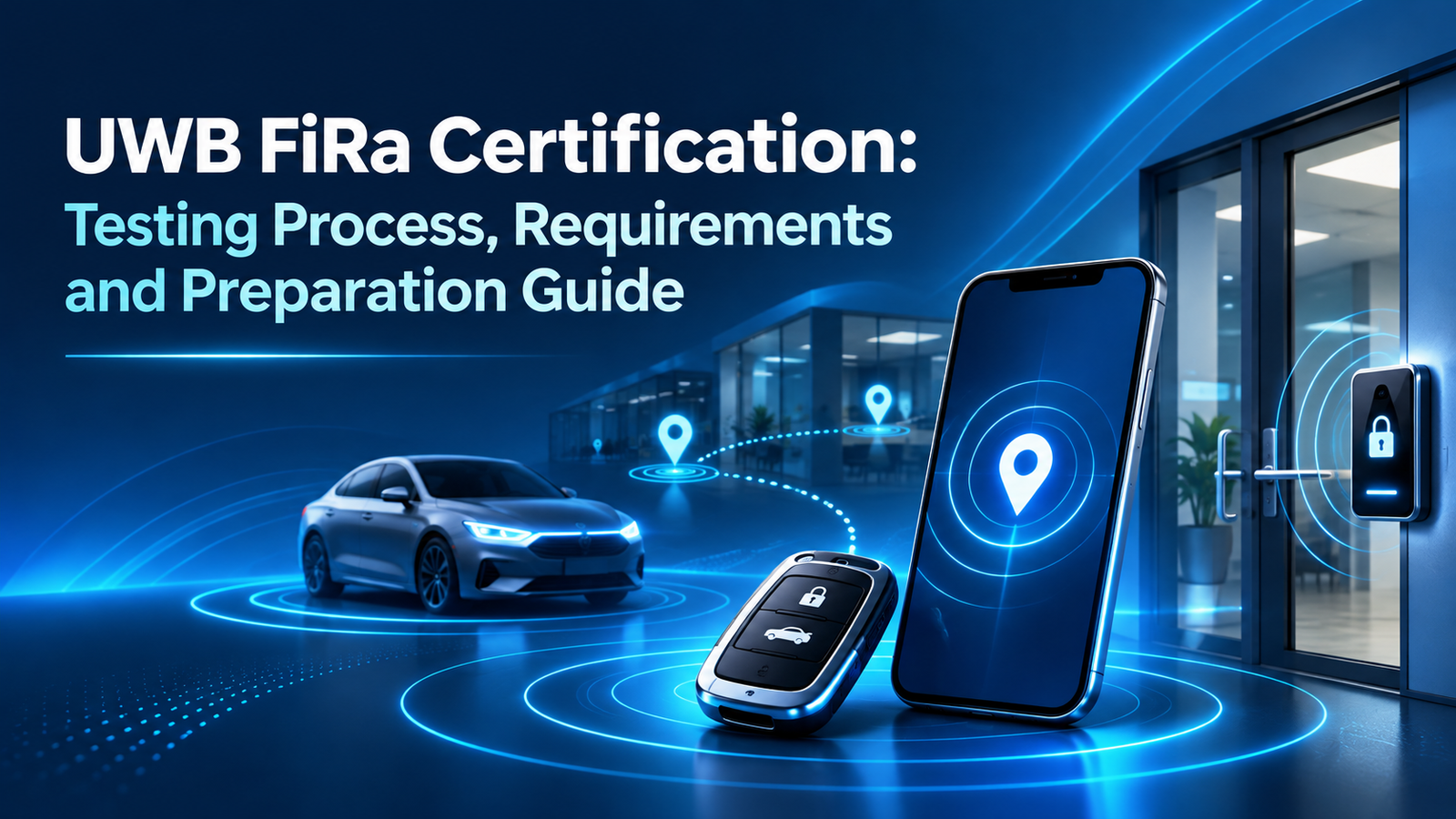
Ultra-Wideband (UWB) technology is becoming increasingly important in secure digital keys, smartphones, smart access systems, asset tracking, and precise indoor positioning.
As UWB adoption expands, manufacturers need to verify that their products can communicate reliably and securely with devices from different vendors.
The FiRa Consortium develops specifications and certification programs designed to support interoperability and secure ranging across the UWB ecosystem.
This guide explains the fundamentals of UWB FiRa certification, typical testing requirements, and how manufacturers can prepare for successful evaluation.
1. What Is UWB Technology?
Ultra-Wideband is a short-range wireless communication technology that uses a very wide radio-frequency bandwidth.
One of its major advantages is the ability to support precise distance measurements using techniques such as Time of Flight (ToF).
UWB is used in applications including:
- Smartphone-based digital keys
- Automotive passive entry and access systems
- Secure building access
- Indoor positioning and asset tracking
- Smart home and connected IoT devices
Compared with conventional proximity detection based on signal strength alone, UWB ranging can provide more accurate distance information under suitable operating conditions.
2. What Is FiRa Certification?
The FiRa Consortium promotes interoperable UWB solutions by developing technical specifications, testing requirements, and certification programs.
FiRa certification helps manufacturers demonstrate that their implementations meet applicable program requirements for interoperable UWB operation.
Depending on the product and certification scope, evaluation may address protocol behavior, ranging-related functions, and interoperability.
FiRa certification is distinct from regulatory radio approvals, such as FCC, CE, or KC. Manufacturers may need both FiRa certification and applicable regulatory approvals before commercial deployment.
3. Key UWB FiRa Testing Areas
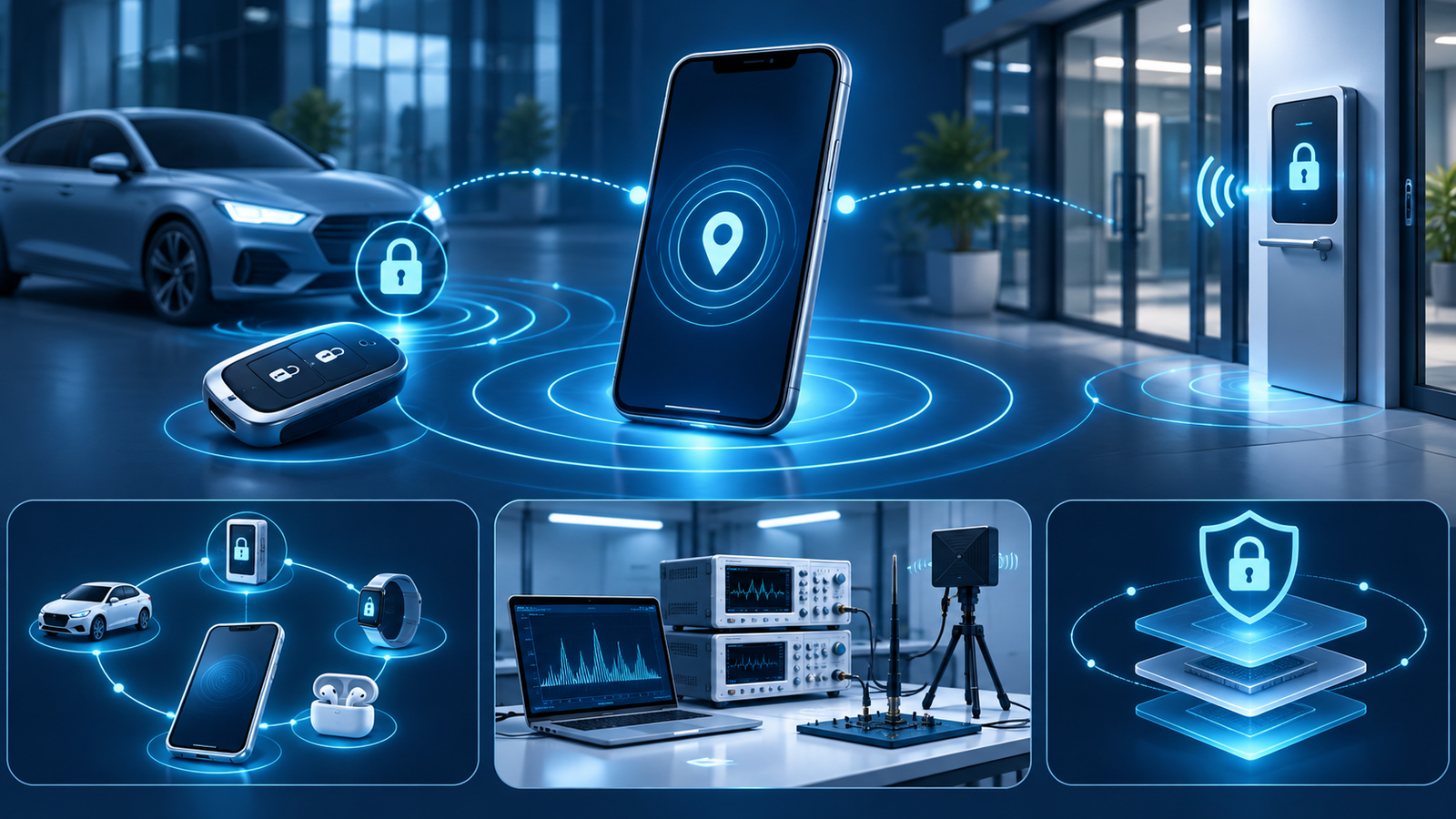
MAC Conformance Testing
MAC conformance testing evaluates whether the UWB device implements applicable communication protocol requirements.
Depending on the supported specification and device role, testing may cover session establishment, configuration, message exchanges, timing behavior, and error handling.
Interoperability Testing (IOP)
Interoperability testing evaluates communication and operation between different UWB implementations.
This is particularly important for products designed to interact with smartphones, access systems, or other devices supplied by different manufacturers.
Ranging and Security-Related Functions
Depending on the certification profile, evaluation may include ranging operation and relevant security-related protocol behavior.
The exact test coverage depends on the applicable FiRa specifications, certification program, and supported features.
4. Typical FiRa Certification Process
Step 1 — Identify the applicable specification
Confirm the target FiRa specification version, certification profile, supported device roles, and relevant features.
Step 2 — Review the product configuration
Document the UWB chipset, firmware, antenna configuration, supported channels, and communication interfaces.
Step 3 — Prepare test samples and tools
Provide representative hardware, stable firmware, necessary test modes, configuration utilities, and technical documentation.
Step 4 — Perform pre-compliance testing
Early evaluation helps identify protocol, configuration, and interoperability issues before formal testing.
Step 5 — Conduct applicable certification testing
Complete the required conformance and interoperability evaluations through the appropriate authorized testing arrangements.
Step 6 — Complete certification procedures
Submit the required results and documentation through the applicable FiRa certification process.
Certification requirements and administrative procedures should be confirmed against the current FiRa program.
5. How to Prepare for UWB FiRa Testing
Manufacturers should prepare the following information before requesting a quotation or test schedule:
- Product name, model, and intended application
- UWB chipset and firmware version
- Target FiRa specification and certification profile
- Supported UWB channels and device roles
- Antenna configuration and relevant hardware information
- Test control software and configuration instructions
- Available pre-test results and previous certification information
- Expected sample availability and project schedule
Providing these details early can reduce uncertainty in the test scope, quotation, and project schedule.
6. FiRa Certification and Regulatory Approval
FiRa certification and regulatory approval serve different purposes.
FiRa certification focuses on applicable interoperability and technical program requirements.
Regulatory certification addresses legal requirements for placing wireless products on specific markets.
For example, UWB products intended for international markets may require evaluation under relevant FCC, KC, or European regulatory requirements.
The applicable standards and approval routes depend on the product's intended use, operating characteristics, and destination markets.
7. UWB FiRa Testing Support from DT&C
DT&C provides testing and certification support for wireless products, including UWB technologies.
Through its FiRa Authorized Test Laboratory capabilities, DT&C supports applicable UWB FiRa testing activities, including conformance and interoperability evaluation within its authorized scope.
DT&C can also help manufacturers coordinate UWB testing requirements with broader international regulatory certification planning.
For an accurate assessment, manufacturers are encouraged to provide their target FiRa specification, product configuration, and intended certification scope.
8. Request UWB FiRa Testing Support
Are you developing a UWB-enabled smartphone, digital key, access control device, or IoT product?
Contact KoreaApproval / DT&C to discuss your UWB FiRa testing requirements, sample preparation, quotation, and expected schedule.
Website: https://koreaapproval.com
Contact: https://koreaapproval.com
Note: Specific test items, certification eligibility, and laboratory scope should be confirmed against the current FiRa program and the product configuration.
← Back to all articles