RF Testing Guide for KC, FCC and CE Certification: Test Samples and RF Test Tools
Why RF test preparation matters
Products with Bluetooth, BLE or WLAN (Wi-Fi) may require radio compliance assessment for their intended markets. KC in Korea, FCC in the United States and CE RED in Europe have different requirements and procedures. A common practical need is to reproduce stable radio operating conditions for laboratory measurements. Ordinary consumer apps may not provide fixed channel or power control.
Recommended baseline: one conducted and one radiated sample
Prepare one conducted sample and one radiated sample as an initial laboratory planning baseline. This is not a universal statutory quantity. Additional units may be needed depending on radio technologies, antenna paths, MIMO, simultaneous transmission, product design and test scope. Confirm the final configuration with the laboratory.
Conducted sample
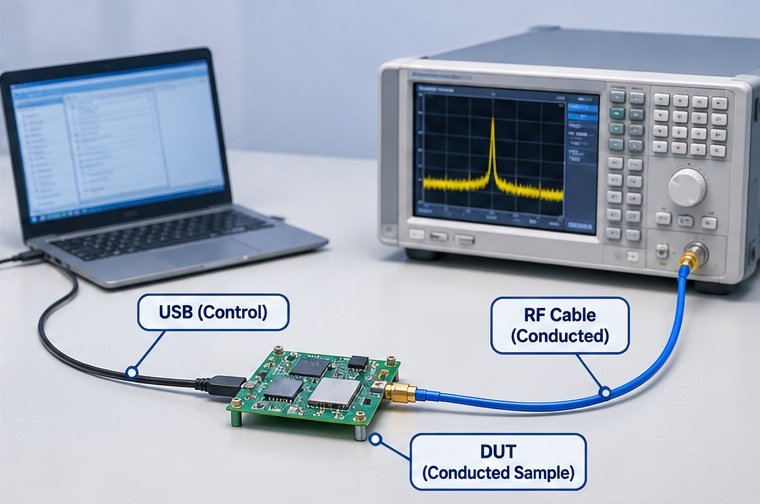
Provide an appropriate RF connector or pigtail, such as SMA, to connect the radio path directly to measurement equipment. Depending on the test scope, this supports measurements such as output power, occupied bandwidth and unwanted emissions. Document each RF path and cable loss. Agree on modifications for multiple transmit chains with the laboratory. The laboratory determines suitable attenuation and input protection.
Illustrative image
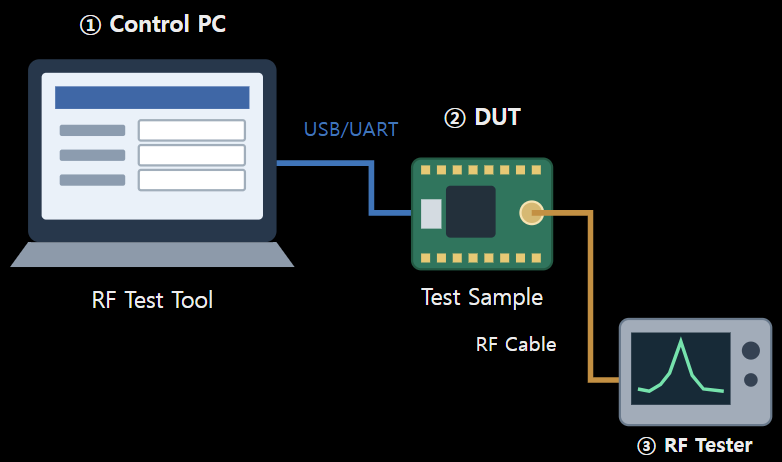
Conducted test connection diagram: control PC → DUT → RF tester. Actual setups may include attenuation.
Radiated sample
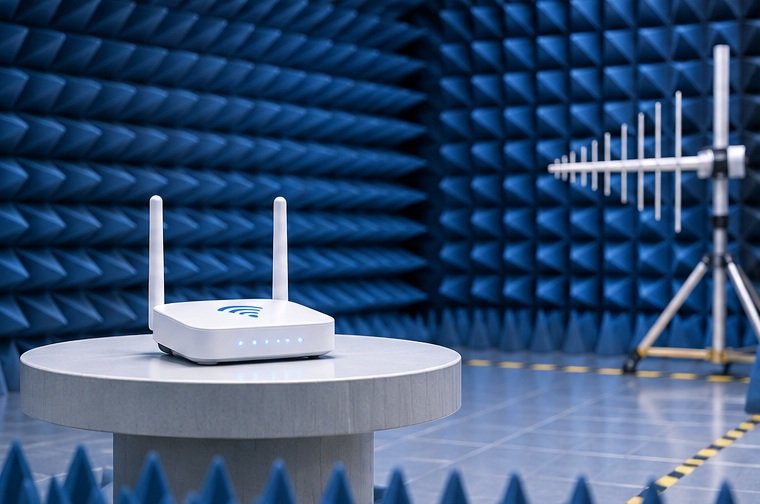
Provide a representative finished product with production-equivalent antennas, enclosure, PCB, power supply and major components. It is used to evaluate radiated characteristics, including unwanted emissions where applicable. Enable the required test modes and coordinate control cabling to avoid affecting measurements. A modified conducted sample is generally not a substitute for the radiated sample.
Illustrative image
What is an RF test tool?
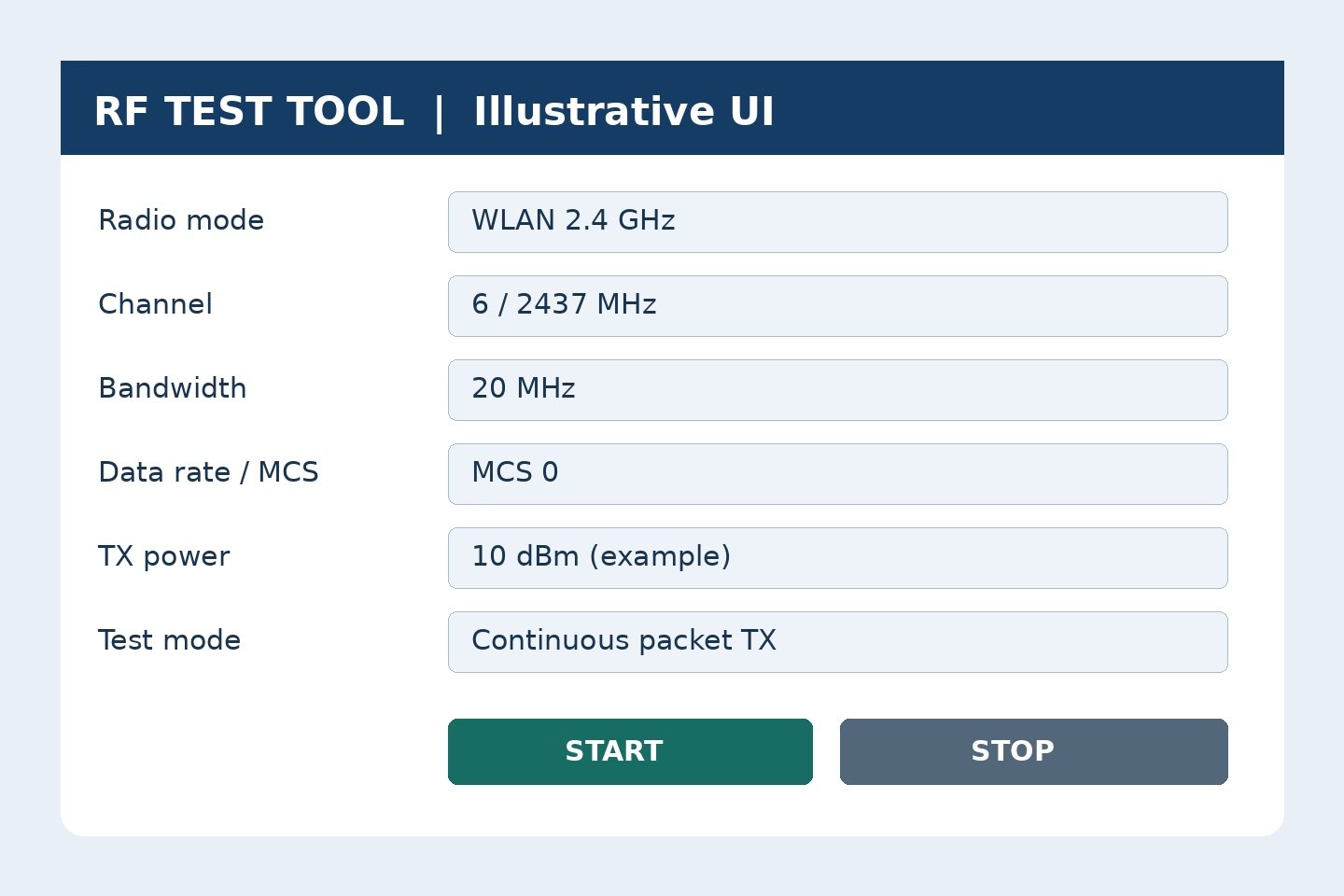
An RF test tool is software, firmware or a command interface supplied by the manufacturer or chipset vendor. It may use a GUI, CLI, AT commands, HCI, UART or USB. The laboratory controls the device under test using the tool and measures its RF performance with separate instruments. The tool itself does not determine certification compliance.
Illustrative image
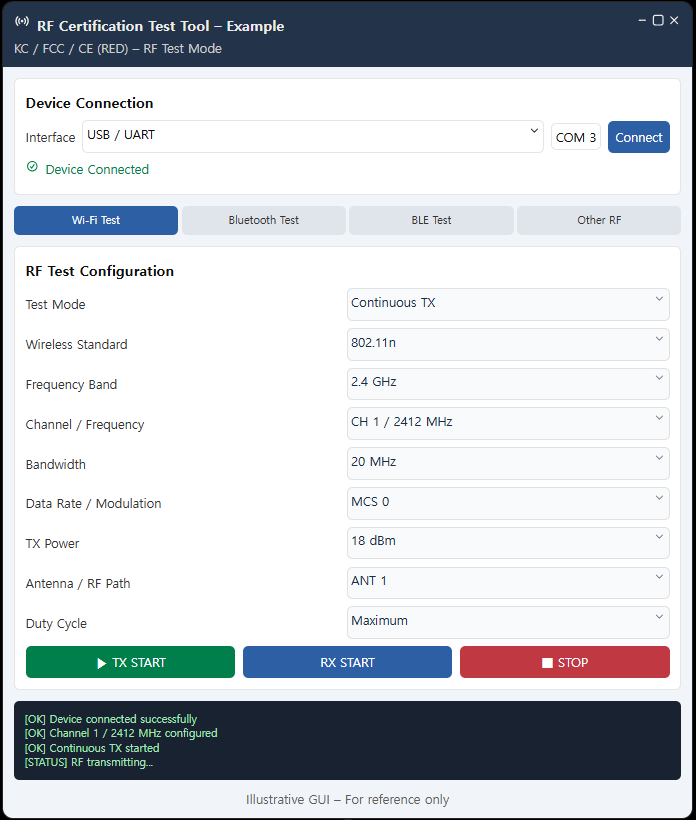
Illustrative GUI only. Values such as 18 dBm are not prescribed test settings.
Bluetooth and WLAN test modes
For Bluetooth Classic, prepare controls for supported BR/EDR modes, channels, packet types and power. For BLE, provide Direct Test Mode (DTM) or equivalent controls for supported PHYs such as LE 1M, 2M and Coded. For WLAN, provide controls for supported bands, channels, bandwidth, data rate/MCS, power, transmit chains and relevant TX/RX modes. Coordinate continuous packet transmission, receiver tests and start/stop functions as applicable. Test conditions must represent the relevant production power and regulatory settings.
Vendor RF test tool examples and references
EspRFTestTool is one example of a chipset-specific tool. Manufacturers should supply the tool and firmware appropriate to their own product; example settings must not be copied to unrelated products.
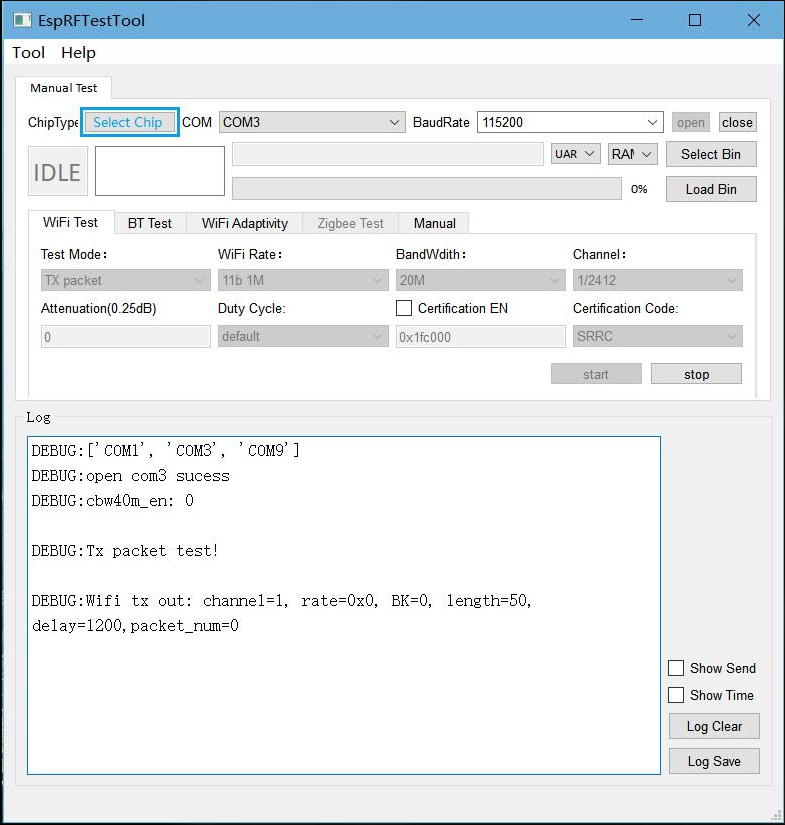
Espressif EspRFTestTool screenshot (supplied image; attributed to Espressif). Features vary by chipset and version.
- Espressif – RF Test Guide
- Espressif – ESP32 Test Tools PDF
- Nordic Semiconductor – Direct Test Mode
- Raytac – DTM and Radio Testing
Manufacturer preparation checklist
- One conducted and one radiated sample (recommended baseline).
- RF test tool and test firmware.
- Installation files, drivers, commands and operating instructions.
- Control and RF cables and power supplies.
- Radio specifications, channel/power/antenna information and circuit or block diagrams.
- Test mode entry and recovery instructions and technical contact. Document differences between test and production firmware and verify tool operation on the actual samples before shipment.
Contact DT&C for testing and certification
If you are preparing for KC, FCC or CE RED radio compliance, share your product specifications, target markets, supported radio technologies and antenna information. DT&C can discuss the applicable test scope, sample configuration and test tool preparation. Quotations and schedules are subject to review of the product and test scope.
← Back to all articles