EU Cyber Resilience Act (CRA): Preparation Guide

How manufacturers of products with digital elements can begin preparing technical evidence, vulnerability processes and lifecycle controls.
Understand the product scope
The EU Cyber Resilience Act (Regulation (EU) 2024/2847) introduces cybersecurity requirements for many products with digital elements placed on the EU market, subject to exclusions and special regimes. Product classification and economic-operator roles must be checked before choosing a conformity assessment route.
Map the staged application dates
The CRA has staged obligations rather than one single start date. Certain vulnerability and incident reporting provisions apply from 11 September 2026, while the main requirements generally apply from 11 December 2027. Check the current consolidated legal text and any implementing guidance before relying on these dates.
Create an asset and threat inventory
Document network interfaces, remote-access features, cloud dependencies, update paths, default settings and third-party components. Assess reasonably foreseeable cybersecurity risks throughout the intended product lifetime.
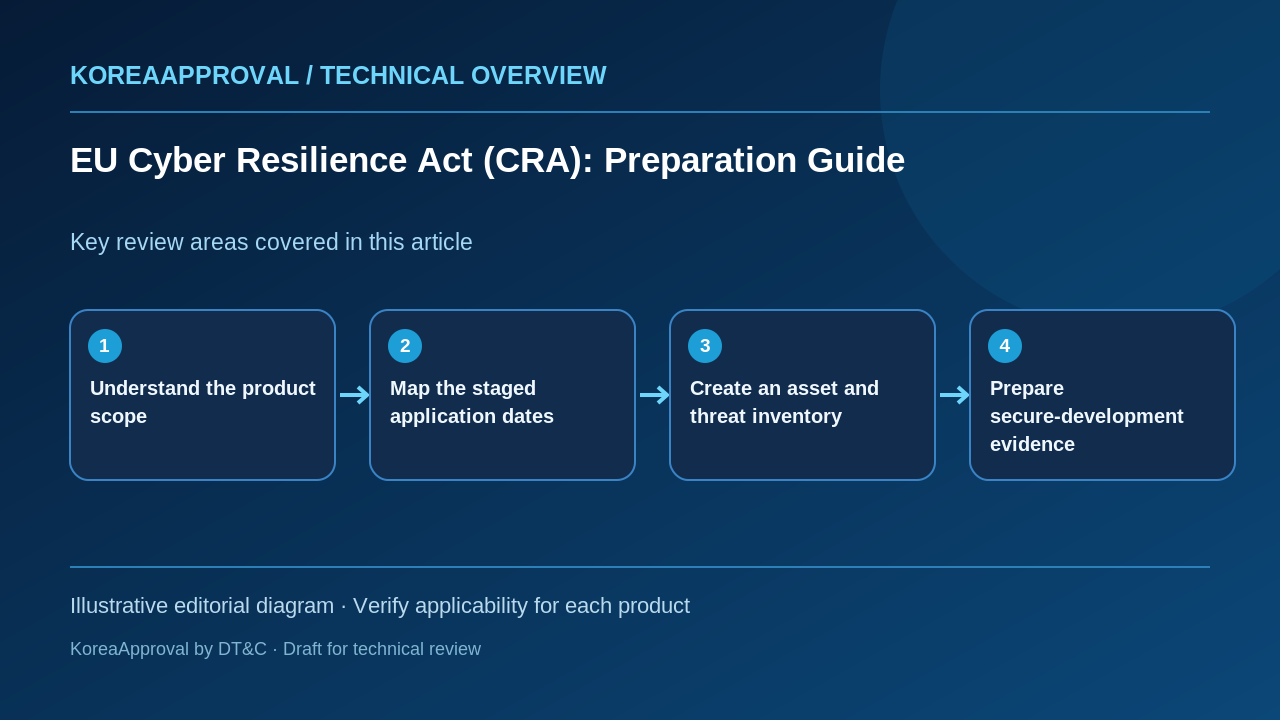
Prepare secure-development evidence
Define secure-by-default settings, authentication controls, vulnerability handling, security testing, software update policy, support period and a software bill of materials where appropriate. Keep traceable records linking risks, controls, verification and user information.
Design a vulnerability response process
Set up intake, triage, remediation, coordinated disclosure and reporting responsibilities. The incident and actively exploited vulnerability reporting rules should be reviewed with legal and cybersecurity specialists.
Coordinate with RED cybersecurity work
RED cybersecurity requirements and the CRA are related but not interchangeable. Existing EN 18031 work may provide useful engineering evidence, but CRA obligations require a separate gap analysis and lifecycle review.
Plan an early gap assessment
KoreaApproval can help structure the technical testing and evidence review. Final legal classification, notified-body requirements and applicability should be confirmed for the specific product.
Editorial draft for technical and legal review. Requirements and program versions must be verified before publication.